Q. What excites you most about your role in building this new hospital?
A. “I’ve been involved in the Monklands Replacement Project for a long time, and what excites me most is the chance to deliver a hospital that truly serves the people of Lanarkshire for generations to come.
I’ve seen firsthand how an aged estate can negatively impact both staff and patients, and this project is my opportunity to help change that, creating a space that supports wellbeing, innovation and care for decades ahead.”
Q. Could you please share a bit about your professional background and how your skills or experience are helping shape this new hospital?
A. “I’ve been in building services engineering since 1999, starting out as a trainee and gradually building up a wide range of experience across various sectors. Over the years, I’ve found my niche in healthcare, which has become a real passion of mine. I’ve worked on everything from small refurbishments to major hospital complexes and large surgical centres across the UK, using a variety of delivery models.
Now, as a director and healthcare lead at Wallace Whittle, I’m bringing all that experience to the Monklands Replacement Project. Having been involved in similar large-scale healthcare developments, I understand the challenges and opportunities that come with designing for clinical environments. I’m focused on applying lessons learned to deliver a design that’s efficient, future proof and tailored to the needs of both staff and patients.”
Q. What values or principles guide you in your work, and how have they influenced your approach to this project?
A. “For me, it really comes down to quality and equity.
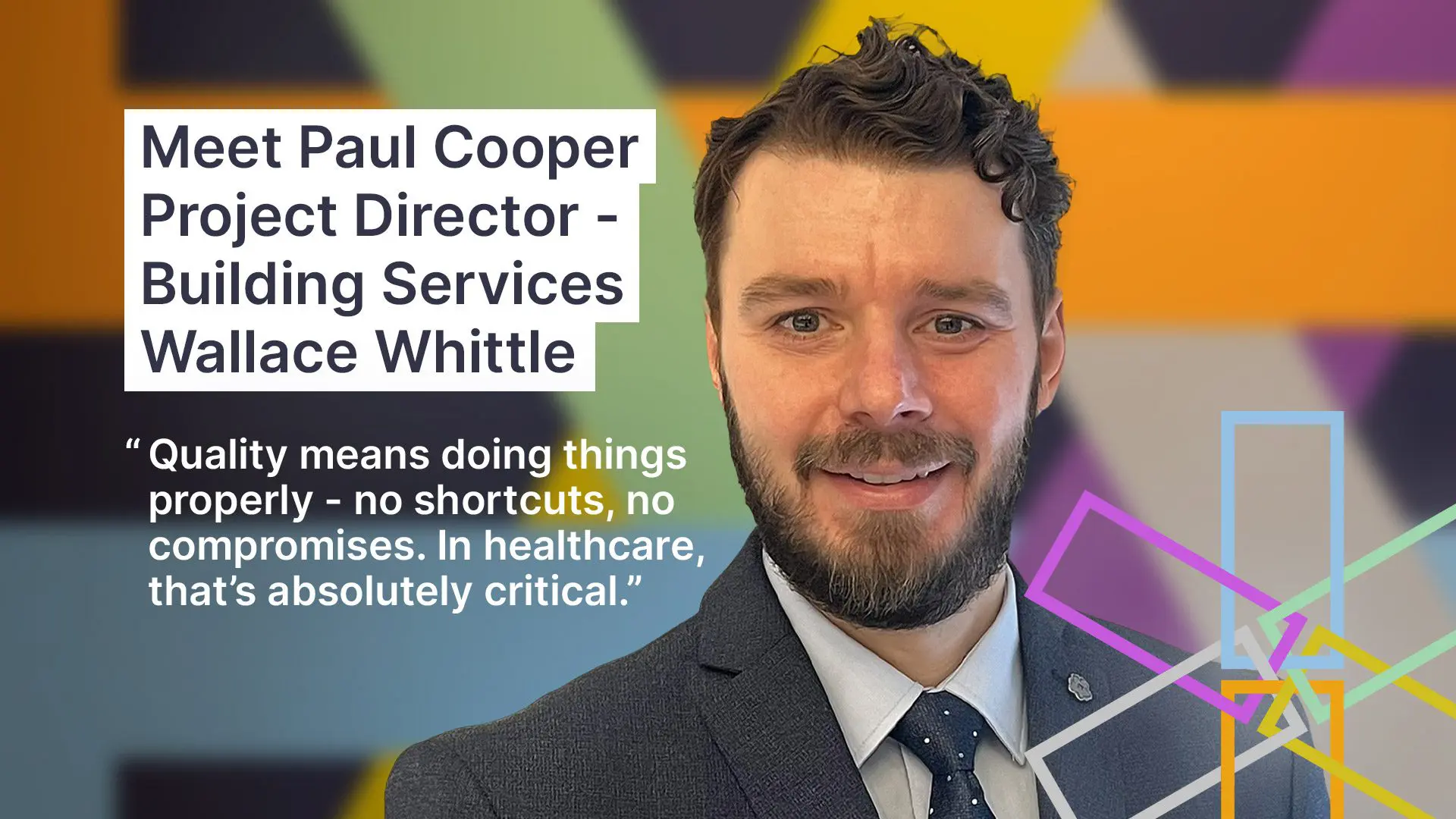
Quality means doing things properly – no shortcuts, no compromises. In healthcare, that’s absolutely critical. The systems we design have to be reliable, resilient and able to support clinical teams without fail. I always try to make sure what we deliver is not just technically sound, but built to last and genuinely useful to the people who’ll rely on it every day.
Equity is just as important. Healthcare buildings should work for everyone – patients, staff, visitors – regardless of who they are or where they come from. That means thinking carefully about accessibility, comfort and fairness in the way spaces are designed and services are delivered. It also means listening properly to the people who’ll use the building and making sure their needs are reflected in the final outcome.
On this project, those values have shaped how I’ve approached everything, from early conversations with stakeholders to the technical detail. I’ve focused on getting the fundamentals right and making sure the design supports the kind of inclusive, high-quality care the NHS is known for.”
Q. Can you please describe a personal highlight of the project so far?
A. “One of the biggest highlights for me so far has been receiving a supported status* for the OBC (Outline Business Case) KSAR (Key Stage Assurance Review). It was a real milestone that reflected all the hard work and collaboration across the team. It’s great to see our approach, especially around low-carbon building services and resilience, being recognised not just for meeting clinical needs, but for pushing sustainability forward in a meaningful way.”
*Supported status means that NHS Scotland Assure has reviewed the project and determined that the project sufficiently meets the key technical criteria (Water and Drainage, Ventilation, Electrical, Medical Gases, Fire Safety and Infection Prevention Control and is able to move to the next stage.
Q. In what ways do you think the project will leave a lasting legacy for the Lanarkshire community?
A. “I think the new University Hospital Monklands is going to be a real game-changer for Lanarkshire. It’ll bring top-quality healthcare closer to home, create jobs and boost the local economy. It’s also being built with the future in mind – sustainable, high-tech and designed to serve the community for generations. More than just a hospital, it’s something the whole area can be proud of.”